Why Oyster Mushrooms are a Must for Your Homestead
Updated: Apr 21
Oyster mushrooms are not just a gourmet treat; they are a resilient, versatile, and rewarding crop. They are perfect for the modern homesteader. If you are looking for a new venture that is both sustainable and productive, oyster mushrooms should be on your list. Here’s why oyster mushrooms deserve a spot on your homestead.
1. Surprisingly Simple to Cultivate
Forget complicated setups and expensive equipment. Oyster mushrooms are easy to grow. They are known for their forgiving nature and ability to thrive on various materials.
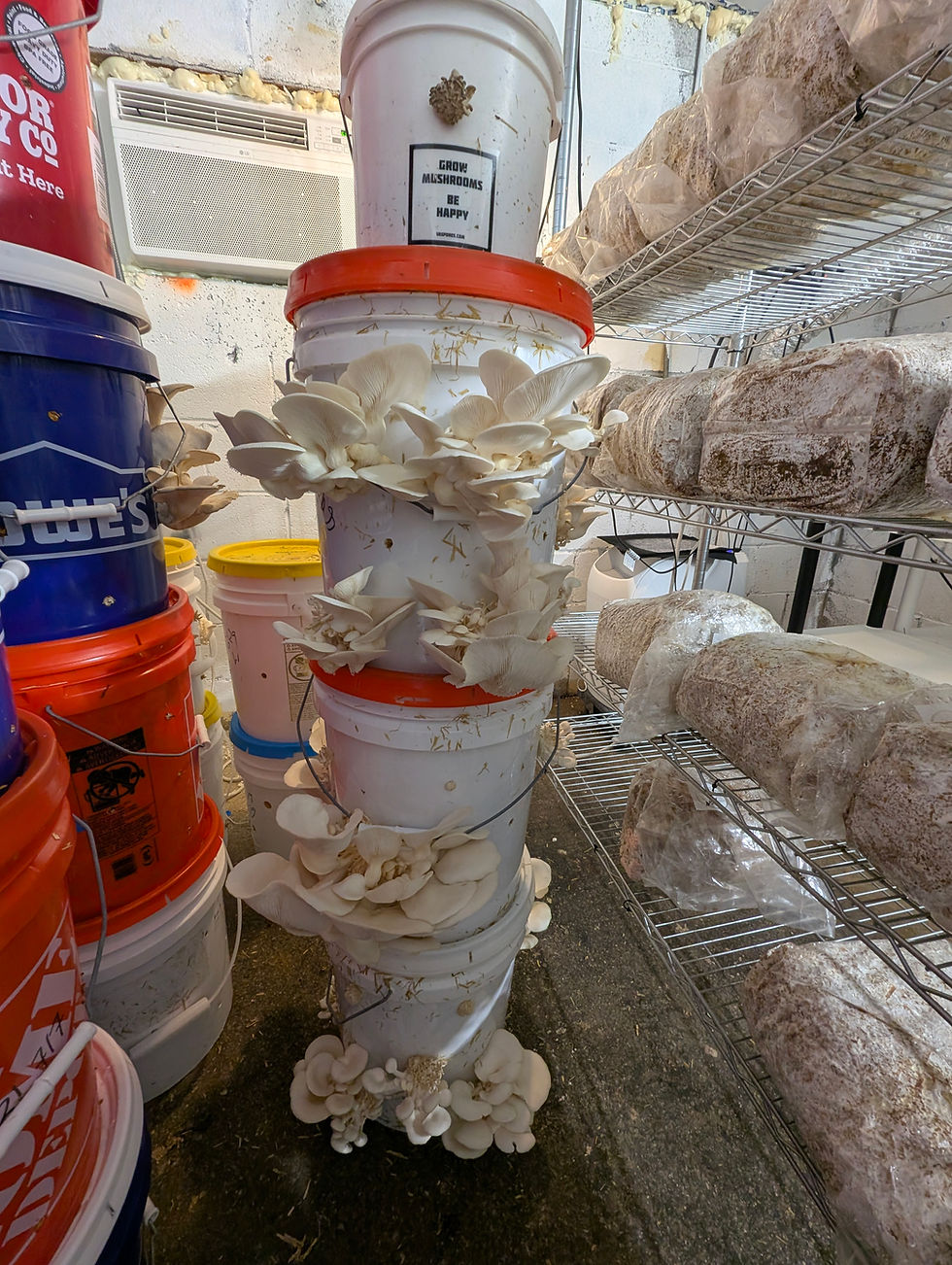
Low-Tech Methods: You can grow them in buckets, bags, or even on logs.
Substrate Versatility: They flourish on agricultural byproducts like straw, corn stalks, sawdust, and even everyday waste like coffee grounds and cardboard. This means you can often source your growing medium for free or cheaply.
2. Fast Track to Harvest
In a world where patience is a virtue, oyster mushrooms offer a quick turnaround.
Rapid Growth Cycle: Unlike many garden crops, you can expect your first flush of oyster mushrooms in as little as a few weeks from inoculation, depending on your method.
Multiple Flushes: With proper care, you can often get several harvests from a single batch of substrate.
3. A Nutritious and Delicious Addition to Your Table
Oyster mushrooms are not just easy to grow; they are packed with flavor and nutritional benefits.
Culinary Star: They have a delicate, savory flavor and a tender texture that makes them versatile in the kitchen. Think stir-fries, soups, omelets, or simply sautéed.
Health Benefits: They are a good source of protein, B vitamins, fiber, and antioxidants. For homesteaders focused on self-sufficiency and healthy eating, they are a fantastic homegrown protein source.
4. Champions of Sustainability and Waste Reduction
Homesteading often aligns with a desire for sustainability, and oyster mushrooms fit this ethos perfectly.
Upcycling Waste: Their ability to grow on "waste" materials turns potential trash into treasure.
Soil Enrichment: Once your mushrooms finish fruiting, the spent substrate is a fantastic soil amendment. It is rich in organic matter that will benefit your garden beds. This creates a closed-loop system!

5. Bonus: Closing the Loop – Spent Substrate as Animal Feed Supplement
Beyond enriching your garden, the spent mushroom substrate (SMS) from your oyster mushroom cultivation can have another valuable use on the homestead: it can be used as a supplemental feed for some of your farm animals. Research has explored this potential, particularly for ruminant animals.
Potential Nutritional Benefits: The mushroom cultivation process helps break down complex materials in the substrate, like lignin and cellulose. This can make the remaining material more digestible and provide a source of crude protein, fiber, and minerals for your livestock.
Good for Ruminants: Studies have shown that SMS from oyster mushrooms can be incorporated into the diets of animals like cattle, sheep, and goats as a partial replacement for their usual feed. It may improve rumen fermentation and nutrient digestibility in some cases.
Other Animals: Emerging research looks at using SMS for poultry and fish, though results can vary.
Using SMS as an animal feed supplement is another way oyster mushrooms contribute to a more circular and resourceful homestead. They turn a "waste" product into a valuable input.
6. Space-Efficient Production
You do not need acres of land to grow a significant amount of oyster mushrooms.
Vertical Growth: They can be cultivated in stacked containers or hanging bags. This makes them ideal for small spaces, sheds, basements, or even a shady spot outdoors, depending on your climate.
7. A Resilient and Fascinating Crop
Oyster mushrooms are generally robust and can outcompete many common contaminants.
Learning Opportunity: Growing mushrooms is fascinating. It provides a deeper understanding of fungi and their role in the ecosystem. It is a great educational activity for the whole family.

Getting Started with Oyster Mushrooms
Ready to dive in and experience the magic of growing your own mushrooms? We’re here to help you every step of the way! Here’s a quick overview of what you’ll need, much of which you can find right here at Virginia Spores:
Mushroom Spawn: This is the "seed" for your mushrooms. We offer high-quality Grain Spawn and ready-to-fruit Fruiting Blocks to help you start quickly.
Substrate: This is the food source for your mushrooms. You can use materials like straw or sawdust. We provide perfectly balanced options like hardwood pellets, soybean hulls, and even pre-pasteurized and sterilized substrates to ensure your success.
Containers: We have buckets with drilled holes or specialized grow bags that work wonderfully.
Basic Environmental Controls: Oyster mushrooms love high humidity, fresh air, and indirect light.
Feeling a bit overwhelmed or want hands-on guidance? Check out our mushroom cultivation classes! We offer workshops for all skill levels, teaching you the entire process from spore to harvest. While many online resources exist, our classes provide personalized support and a chance to ask all your questions.
Conclusion: Give Oyster Mushrooms a Grow!
For homesteaders seeking a productive, sustainable, and rewarding addition to their efforts, oyster mushrooms are a clear winner. They are relatively easy to grow, with quick yields of delicious and nutritious food. Additionally, they contribute to a more sustainable system by upcycling waste into soil amendments and even animal feed supplements. Lastly, they are fascinating to cultivate.
Why not give them a try?
At Virginia Spores, we're passionate about helping you succeed. We have all the supplies you need, from beginner-friendly kits to bulk substrates, and the expert knowledge to guide you.
Have you tried growing oyster mushrooms on your homestead? What were your experiences? Share your successes or challenges in the comments below. Have you ever used spent mushroom substrate for your animals or garden?