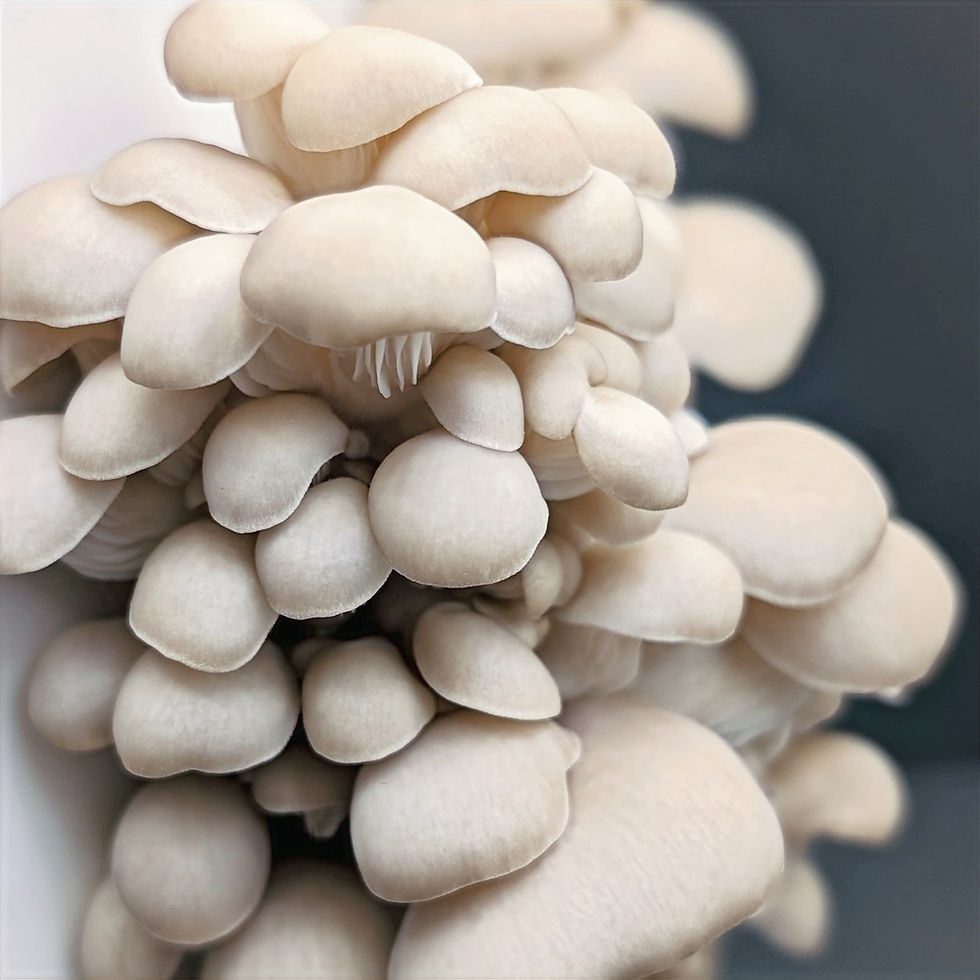
Nature's Statin: Exploring the Potential Cholesterol-Lowering Effects of Oyster Mushrooms
Nature's Statin: Exploring the Potential Cholesterol-Lowering Effects of Oyster Mushrooms
While oyster mushrooms (Pleurotus ostreatus) are widely celebrated for their culinary versatility, emerging research suggests they may also offer unique functional benefits for cardiovascular health (Cateni et al., 2022). Scientific investigations indicate that these edible fungi naturally synthesize a compound used in modern prescription medications, offering a dietary approach that may help support healthy cholesterol levels (Guillamón et al., 2010). However, while clinical studies show promising cardiometabolic benefits, real-world results may differ, and mushrooms should be viewed as a complementary dietary strategy rather than a replacement for medical treatments.
1. A Natural Source of Lovastatin Oyster mushrooms are rich in various bioactive compounds, but perhaps the most notable for heart health is mevinolin, widely known as lovastatin (Parnian-Khajehdizaj et al., 2024). Lovastatin is a naturally occurring statin that functions as a competitive inhibitor of 3-hydroxy-3-methylglutaryl coenzyme A (HMG-CoA) reductase (Guillamón et al., 2010). Because HMG-CoA reductase is the rate-limiting enzyme responsible for synthesizing cholesterol in the liver, compounds that block this enzyme have the potential to decrease the body's internal cholesterol production (Parnian-Khajehdizaj et al., 2024).
2. The Synergistic Role of Dietary Fibers Research suggests that the potential cholesterol-lowering effects of oyster mushrooms do not rely on lovastatin alone; instead, they may be enhanced by the mushroom's dense supply of complex dietary fibers, particularly beta-glucans (Cerletti et al., 2021). These beta-glucans are believed to form a viscous, gel-like substance in the gastrointestinal tract that can physically trap bile acids and prevent their reabsorption (Cerletti et al., 2021). Because bile acids are synthesized from cholesterol, this process may force the liver to pull circulating low-density lipoprotein (LDL) cholesterol out of the bloodstream to produce new bile, potentially driving down systemic cholesterol levels further (Cerletti et al., 2021).
3. Insights from Clinical Studies Several clinical trials have explored the cardiometabolic impact of incorporating oyster mushrooms into the diet. For instance, some studies indicate that daily consumption of P. ostreatus (either fresh, cooked, or as a dried powder) may help decrease total cholesterol, triglycerides, and LDL ("bad") cholesterol in individuals with dyslipidemia or Type 2 diabetes (Khatun et al., 2007; Kajaba et al., 2008). One trial providing 30 grams of dried oyster mushroom soup daily to individuals with moderate hyperlipidemia found significant reductions in triglyceride concentrations and oxidized LDL levels compared to a placebo group (Schneider et al., 2011).
4. Real-World Expectations and Limitations While these clinical studies show positive trends, it is crucial to recognize that real-world results may differ based on individual metabolism, diet, and lifestyle. A systematic review of clinical trials evaluating P. ostreatus noted that while the mushroom may improve glucose and lipid metabolism, the overall certainty of the evidence is currently considered low due to methodological weaknesses in some studies, such as small sample sizes or a lack of control groups (Dicks & Ellinger, 2020).
Furthermore, the exact concentration of lovastatin and beta-glucans can vary significantly depending on the mushroom strain, cultivation conditions, and processing methods (Venturella et al., 2021). Therefore, while incorporating oyster mushrooms into a balanced diet may help support cardiovascular wellness, individuals should always consult with a healthcare provider for managing clinical conditions like hyperlipidemia.
Author's Note: If you are looking for an easy, culinary way to incorporate these functional mushrooms into your daily diet, we offer both pure Oyster Mushroom Powder and crafted Umami Seasonings. We grow our mushrooms on a closed-loop farm in Virginia's Northern Neck and dry them to strict standards to preserve their full compound matrix. Whether you want the raw powder for your own kitchen or a finished seasoning to elevate your meals, you can explore our farm-grown pantry here.
Works Cited
Cateni, F., et al. (2022). Mycochemicals in Wild and Cultivated Mushrooms: Nutrition and Health. Phytochemistry Reviews, 21(2), 339-383.
Cerletti, C., Esposito, S., & Iacoviello, L. (2021). Edible Mushrooms and Beta-Glucans: Impact on Human Health. Nutrients, 13(7), 2195.
Dicks, L., & Ellinger, S. (2020). Effect of the Intake of Oyster Mushrooms (Pleurotus ostreatus) on Cardiometabolic Parameters—A Systematic Review of Clinical Trials. Nutrients, 12(4), 1134.
Guillamón, E., et al. (2010). Edible mushrooms: Role in the prevention of cardiovascular diseases. Fitoterapia, 81(7), 715-723.
Kajaba, I., et al. (2008). Clinical studies on the hypolipidemic and antioxidant effects of selected natural substances. Bratislavske Lekarske Listy, 109, 267–272.
Khatun, K., et al. (2007). Oyster mushroom reduced blood glucose and cholesterol in diabetic subjects. Mymensingh Medical Journal, 16, 94–99.
Parnian-Khajehdizaj, N., et al. (2024). Association Between Pleurotus ostreatus Consumption and More Optimal Sports Performance: A Narrative Review. Journal of Food Biochemistry, 2024, 2610415.
Schneider, I., et al. (2011). Lipid lowering effects of oyster mushroom (Pleurotus ostreatus) in humans. Journal of Functional Foods, 3(1), 17–24.
Venturella, G., et al. (2021). Medicinal Mushrooms: Bioactive Compounds, Use, and Clinical Trials. International Journal of Molecular Sciences, 22(2), 634.