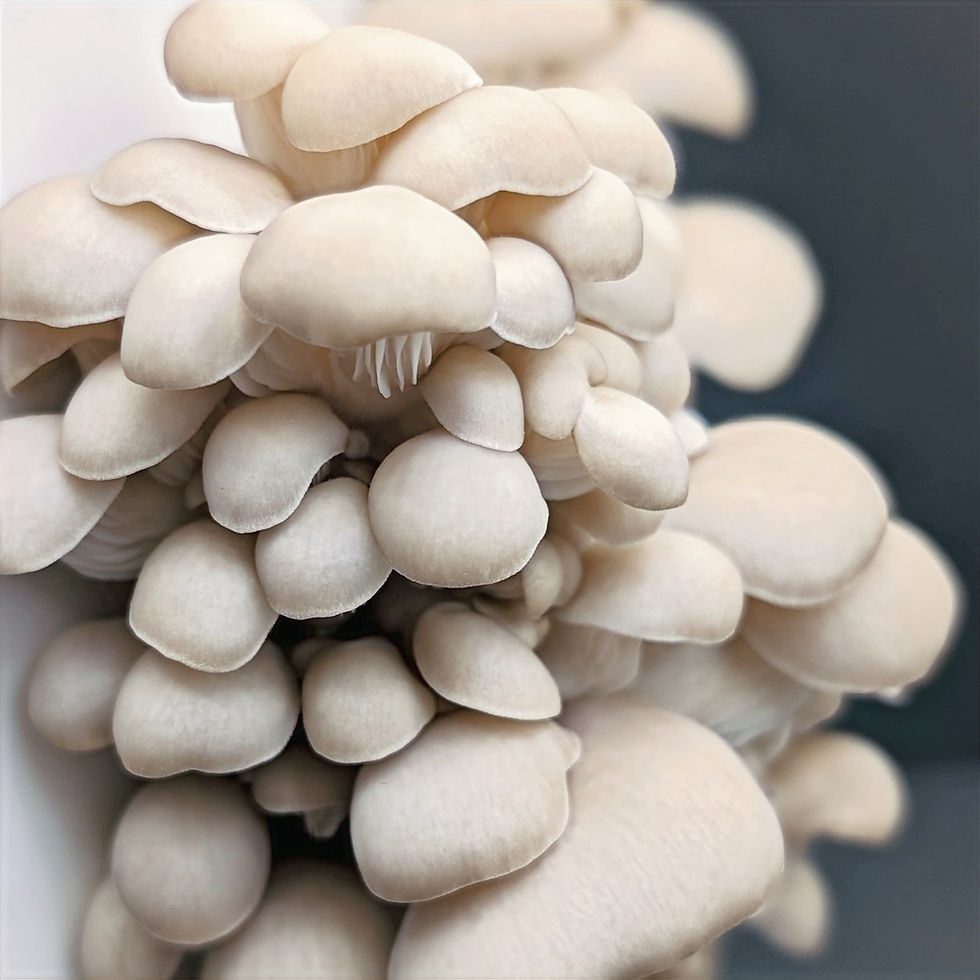
Oyster Mushrooms, Mood, and the Nervous System — What the Research Shows
Educational content: This article summarizes peer-reviewed scientific research on oyster mushrooms. These statements have not been evaluated by the Food and Drug Administration. Oyster mushrooms are a food — they are not intended to diagnose, treat, cure, or prevent any disease or medical condition, including anxiety, depression, or sleep disorders. Oyster mushrooms are not a substitute for professional medical care. Consult your physician regarding any mental health or sleep concerns.
Oyster mushroom protein contains GABA — the same inhibitory neurotransmitter the brain uses to regulate anxiety and sleep — alongside L-ergothioneine that protects brain mitochondria, beta-glucans that influence serotonin production through the gut-brain axis, and adaptogenic compounds that buffer the body's cortisol response to chronic stress.
On this page
The neurotransmitter anchor: GABA and nervous system calming
How ergothioneine protects the brain from oxidative stress
The gut-brain axis: how oyster mushrooms influence serotonin
Adaptogenic properties and the HPA stress axis
The neurotransmitter anchor: GABA and nervous system calming
Oyster mushroom protein contains GABA — gamma-aminobutyric acid — the primary inhibitory neurotransmitter in the human central nervous system. GABA's principal role is to reduce neuronal excitability throughout the nervous system. When the brain is overwhelmed by stress, neurons can fire too rapidly, leading to anxiety, restlessness, and insomnia. By binding to specific receptors, GABA effectively puts the brakes on hyperactive neural transmission, promoting a state of calm and relaxation.
Synthetic sleep aids and anti-anxiety medications frequently target these exact GABA pathways pharmacologically. Consuming foods naturally rich in GABA provides a gentler dietary approach to the same nervous system. Oyster mushrooms also contain B-complex vitamins — particularly riboflavin (B2) and niacin (B3) — which play an essential role in maintaining a healthy, resilient nervous system and supporting the enzymatic pathways that produce neurotransmitters.
How does ergothioneine protect the brain from oxidative stress?
The human brain consumes a massive amount of oxygen, making it highly susceptible to oxidative stress — a condition where free radicals damage cellular DNA and lipids. This chronic oxidative damage is not just a hallmark of physical aging; it is heavily implicated in mood disorders, cognitive decline, and neurodegenerative diseases.
Oyster mushrooms combat neural degradation through L-ergothioneine, which crosses the blood-brain barrier and accumulates preferentially within the mitochondria of neurons. By protecting these mitochondrial components from oxidative damage, ergothioneine ensures that neurons maintain the energy capacity required for optimal cognitive function. This mitochondrial protection directly supports mental clarity and mitigates the cellular stress that can exacerbate anxiety and depression at a biological level.
How do oyster mushrooms influence serotonin through the gut-brain axis?
Perhaps the most significant frontier in nutritional psychiatry is the gut-brain axis, and this is where oyster mushrooms have their broadest neurological impact. The indigestible beta-glucans in oyster mushrooms travel to the colon where they act as prebiotics, selectively feeding Lactobacillus and Bifidobacterium. As these bacteria ferment the mushroom fibers, they produce short-chain fatty acids that interact with free fatty acid receptors and the vagus nerve — establishing a direct neural communication line between the gut and the brain.
This microbiome modulation is essential for the regulation of serotonin, norepinephrine, and dopamine — the monoamine neurotransmitters that govern mood. Serotonin in particular is the biochemical precursor to melatonin, the hormone that dictates sleep-wake circadian rhythms. Approximately 90% of the body's serotonin is produced in the gut, not the brain — which is why the gut environment directly influences mood and sleep quality in ways that no amount of brain-targeted supplementation can fully compensate for.
What are the adaptogenic properties of oyster mushrooms?
Emerging clinical literature is beginning to classify specific mushroom compounds as adaptogens — substances that aid the body in maintaining physiological balance during periods of intense stress. The body's primary stress response system is the hypothalamic-pituitary-adrenal (HPA) axis. When faced with a stressor, the HPA axis triggers the release of cortisol and adrenaline, initiating the fight-or-flight response. Chronic activation of this pathway leads to burnout, disrupted sleep architecture, and persistent anxiety.
The bioactive compounds in oyster mushrooms have been shown to interact with the HPA axis, helping to buffer the body's response to stress hormones. By modulating this axis, the compounds act as a biological shock absorber, promoting resilience rather than reactivity. This adaptogenic potential helps explain why mushroom extracts are increasingly utilized in holistic medicine to improve mental clarity, stabilize erratic moods, and enhance the restorative quality of sleep.
What the research shows
A review of clinical and epidemiological evidence found that populations adhering to dietary patterns rich in mushrooms consistently exhibit lower risk of depressive symptoms and fewer difficulties initiating sleep, with the gut microbiome-vagus nerve axis regulating serotonin and dopamine production identified as the primary mechanism. Cha et al., Neuroscience and Biobehavioral Reviews, 2024.
Beta-glucan-derived SCFAs interact with the gut-brain network via FFAR3 receptors and the vagus nerve, modulating the production of serotonin and dopamine that govern mood and sleep. Moniruzzaman et al., Applied Biological Chemistry, 2025.
Oyster mushrooms have been identified as adaptogens acting on the HPA axis, with ergothioneine specifically protecting brain mitochondria from the oxidative stress associated with cognitive decline and mood disorders. Sharma et al., Heliyon, 2024.
Continue exploring the science
Gut health: Do oyster mushrooms feed the good bacteria in your gut? — Longevity: Are oyster mushrooms the most powerful anti-aging food you've never heard of? — Athletic recovery: Why are oyster mushrooms showing up in elite athletic recovery programs?
Sources
Cha, S., et al. (2024). A review of the effects of mushrooms on mood and neurocognitive health across the lifespan. Neuroscience and Biobehavioral Reviews, 158, 105548.
Deepalakshmi, K., & Mirunalini, S. (2014). Pleurotus ostreatus: an oyster mushroom with nutritional and medicinal properties. Journal of Biochemical Technology, 5(2), 718–726.
Moniruzzaman, M., et al. (2025). Pharmacological role of mushroom-sourced beta-glucans in health and disease. Applied Biological Chemistry, 68:41.
Sharma, E., et al. (2024). Edible mushrooms trending in food: Nutrigenomics, bibliometric, from bench to valuable applications. Heliyon, 10, e36963.